Showing posts with label education. Show all posts

Monday, April 29, 2013

Why I Care About Teacher Pay

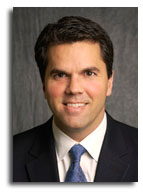
I come from a long line of educators. My great-grandmother taught elementary school in Lubbock, TX. My grandmother taught high school english for 37 years at Paschal High School in Fort Worth. My mother has taught kindergarten for 18 years at Westcliff Elementary in Fort Worth. My cousin teaches elementary school in Aledo, TX. Another cousin is a psychology professor at Yale University in New Haven, CT.

As you can see, the Chilton family likes to teach. That is why I care about HB 176 and the need for an increase in teacher salaries here in Texas as well as nationwide. I believe teachers are underpaid and under appreciated when it comes to government action.

According to a 2011 article, the United States ranked 22nd out of 27 countries when looking at teacher pay. The top countries, minus New Zealand, are all in Europe. This makes sense because teaching in Europe is a highly valued profession, therefore they are paid more.

I am fortunate to have so many passionate family members that are teachers. I have always been told the importance of education, and I will continue to believe in its importance.

Final update: HB 176 is still in education committee.

"A teacher affects eternity: he can never tell where his influence stops."
 - Henry Adams

Preston Chilton
Post 5


Friday, April 19, 2013

The History of Teacher Pay

As pressing as this issue is in today's world, it is important to know the history of teacher pay to see how it has changed over the years.

According to a CPRE article, there have been three major shifts in the way teachers have been paid in the United States. In the 1800s, teachers were paid by a "boarding round" system, which consisted of room and board for the teacher provided by the local community. In the early 1900s, teachers started to be paid on a position-based salary schedule. This meant that elementary teachers were paid less than secondary teachers because of the differences in educational requirements for each position. The third historical shift came in the latter half of the 1900s. The single-salary schedule paid teachers the same salary if they had the same qualifications, and race and gender were not factors anymore. This system also instituted a pay raise for increasing years of experience, similar to what is practiced today.

Similarly, looking at the salary amount of teachers over time is important too. In a Chicago Mag article, the author looked at average teaching salaries over time to comment on the change that has occurred. In 1966 (the first year the author looked at), the average starting salary of a teacher was $5,500. Fast forward to 2010 where the starting pay was $50,500.

It is amazing how far it has come, yet how far it still has to go. (Side note: Chicago's average teacher salaries are higher than the national average.)

In the 2013 Texas legislative session, HB 176 was referred to the Public Education committee on February 6 and is still "in committee."

Preston Chilton
Post 4


Thursday, March 21, 2013

Teacher Salary Increase: A Nationwide Effort


The issue of increasing teacher salaries is not specific to the Lone Star State. This is a nationwide problem that is being addressed in multiple ways by multiple states. North Carolina, Florida, and Pennsylvania have all recently created legislation that affect teacher salaries.
 
In North Carolina, Senate leader Phil Berger revived a proposal Tuesday to end job-protecting tenure rules for veteran school teachers and to move forward a pay proposal that seeks to reward the best-performing classroom instructors. Berger hopes this proposal will give teachers an extra incentive to perform well. Read more about this here.

Gov. Rick Scott pushed to give teachers $480 million in new money for pay raises. According to the article, Senate budget writers are likely to go along with Scott's new legislation.
 
Pennsylvania is cutting teacher salaries in Philadelphia. A recent meeting confirmed that 23 public schools are to be closed, which in effect will reduce teacher pay by 13 percent. Unfortunately, not all states are headed in the direction of increasing teacher salaries. Read more about the cuts here.
 
No updates on HB 176.
 
Photo Source: http://www.greatschoolsforamerica.org/gsa-wp/we-are-upset-photo-diary
 
Preston Chilton
Post 3

Thursday, February 28, 2013

Education Budget: A brief history

The education budget has always been an issue in Texas history. Most notably was the budget cut last time the legislature met. The 82nd Legislature cut $4 billion of the education budget. They thought this was a good idea, but in the past two years we have seen dramatic changes occurring across the board. The student to teacher ratio is extremely disproportionate. When the legislature approved the budget, they did  not account for new students coming to the system or how many teachers they would have to cut as a result. This cut was the first major cut to education since World War II.

But there is good news! The Senate Financial Committee panel has just approved a proposed budget to add $1.5 billion dollars to the state's education fund! The rest of the Senate still needs to approve the budget, but if it passes this money would significantly impact education in Texas. The money includes funding for Teach for America, pre-kindergarten programs and Texas' Virtual School Network. The budget does not currently have money allocated for important programs such as early college education programs or a program designed to help students who are falling behind in school.

Ivy Anderson

Sunday, February 27, 2011

Texas anti-bullying legislation: a state comparison


As anti-bullying legislation begins to be introduced in Austin, it is interesting to look at what other states have done in the area comparatively.  Anti-bullying legislation is relatively widespread throughout the United States, with 45 states having passed measures. Hawaii, Michigan, Montana, North Dakota and South Dakota are the 5 states that do not have any anti-bullying laws.  The difference in the state laws becomes the degree of protection and extent of definition in the laws.  Bully Police USA, a watchdog organization advocating for bullied children, reports on state anti-bullying laws by giving each state a grade.  How the organization grades states can be found here.  One of the major criteria for a high grade is whether a cyberbullying clause is included in the legislation, an issue addressed in a few proposed anti-bullying bills in Texas this session, including HB 224, SB 245 and SB 42.  Texas’ current legislation, passed in 2005, has a grade of a C- on Bully Police USA.

One of the most recently publicized states in the arena of anti-bullying legislation is New Jersey.  A New York Times article describes the state’s law, signed by Governor Chris Christie in January 2011, as the nation’s toughest law against bullying.  The law requires officials to run anti-bullying programs at every school, training for teachers and quick investigations of incidents, and it includes very strict consequences for bullying. The signing of this law came three months after the death of Tyler Clementi, a Rutgers University freshman who committed suicide because he was bullied for being gay. Garden State Equality, a New Jersey gay rights organization that advocated for the bill said this law has become the “Anti-Bullying Bill of Rights.”  Several other states—including Georgia, New Hampshire, Maryland and Florida—have enacted similar, but slightly less strict, measures. 

One state that has anti-bullying legislation but has pushed back against stricter measures is Minnesota.  The state gets a C- on Bully Police USA, the same grade as Texas.  In October of 2010, the Minnesota Independent reported about an LGBT anti-bullying initiative that passed the state legislature but was vetoed by Gov. Tim Pawlenty. Republican gubernatorial candidate Tom Emmer opposed to the stricter agenda.  “I don’t think we need more laws. I think we need more understanding,” he said.  “We are supposed to respect each other’s point of view, and we are not supposed to tell because they have a different point of view that they are not entitled to have that.” 

This year’s Texas Legislature faces the question of whether or not to enact stricter anti-bullying measures.  Bully Police USA is an anti-bullying advocacy organization that obviously thinks there should be stricter enactment, but others like Tom Emmer and several advocacy groups like Focus on the Family think that legislation should be less strict.  The following two videos show responses to the New Jersey anti-bullying bill, both positive and cautionary.


Texas Legislation Tracker

There has been progress on all of the anti-bullying bills I am tracking in Texas this legislative session; all of the bills are presently in committee.  The bills along with their progress are listed below:

  • 82(R) HB 224-read first time, referred to the Public Education Committee, and scheduled for public hearing on March 1. 
  • 82(R) SB 245-read first time and referred to the Education Committee. 
  • 82(R) HB 24-read first time, referred to the Public Education Committee, and scheduled for public hearing on March 1. 
  • 82(R) HB 130-read first time, referred to the Human Services Committee, and scheduled for public hearing on March 1. 
  • 82(R) HB 170-read first time and referred to the Public Education Committee. 
  • 82(R) SB 42-read first time and referred to the Education Committee. 
  • 82(R) SB 205-read first time and referred to the Education Committee. 
  • 82(R) SB 242-read first time and referred to the Education Committee.
-Michael Dabbs


Saturday, January 29, 2011

Bills Seek Stricter School Bullying Policies and Addition of "Cyberbullying"

Though most of the focus involving education during the 82nd Texas Legislative Session will be on spending, some advocacy groups and legislators are pushing for education reform in the area of school bullying.  School bullying entered into national exposure as a possible rationale behind the Columbine High School shooting in 1999.  Since then, most states have incrementally adopted legislation regulating school bullying.

The current Texas law, HB 283 of 2005, defines bullying and allows a young person to ask for a classroom or school transfer if they feel like bullying is impeding on their education.  The recent string of high-profile teen and young adult suicides caused by cyberbullying, however, has some calling for stricter regulation and the expansion of the definition of bullying to include cyberbullying. An article from the Star-Telegram reports on the filed anti-bullying bills for this legislative session in Texas.  

Several advocacy organizations are paying close attention to this reform in Texas. One organization pushing for reform is the Texas Classroom Teachers Association.  It's position on cyberbullying can be found here.  Also, the issue tops LGBT organization Equality Texas's 2011 agenda because several recent suicides of gay and lesbian teens have branched the issue out into the gay community.  One group wary of anti-bullying reform in Texas is the Texas Eagle Forum, as reported in the Star-Telegram article.  Nationally, Focus on the Family has pushed back against reform. 

School Bullying Texas Legislation Tracker

There are eight anti-bullying bills in the Texas state House and Senate that I will follow throughout the session.  Of these, Mark Strama’s HB 224 and Wendy Davis’s SB 245 are the most publicized and extensive measures.  All of the bills have currently been filed (and Senate bills received by the Secretary of the Senate), but none of them have been introduced to their respective chambers yet.  The bills include  82(R) HB 224, 82(R) SB 245, 82(R) HB 24, 82(R) HB 130, 82(R) HB 170, 82(R) SB 42, 82(R) SB 205, and 82(R) SB 242.

State Representative Mark Strama-District 50.  Photo courtesy of http://www.house.state.tx.us/members/member-page/?district=50
State Senator Wendy Davis-District 10.  Photo courtesy of http://www.senate.state.tx.us/75r/senate/members/dist10/dist10.htm


--Michael Dabbs