Monday, January 31, 2011

Medicaid: Is it really worth cutting?

The discussion of Medicaid in Texas has been a tough struggle since first conversations of budget cuts. As we know, Texas in debt, and as a result the state’s legislature is contemplating statewide cuts to certain departments. Health-care heads the list as the department that is receiving a good amount of attention. According to bizjournal.com, Texas Medicaid covers more than 3 million Texans. Medicaid pays for two-thirds of Texans in a nursery home and half of baby deliveries in the state each year.

Some legislators are indifferent about the effects of the withdrawal of the Medicaid program, which funds about $15 billion for healthcare in the state of Texas. In general, Republicans believe cutting Medicaid from Texas budget will allow the state to have some leeway as far as spending. They also believe that eliminating Medicaid will save money in the budget because the state will not use the federal funding that is given. Democrats believe that cutting Medicaid will be tragic in Texas because there would be more Texans not receiving the proper medical attention that is needed and can be provided. Yes, it would help the state tremendously, but at what cost. Many low-income families would have to go without.


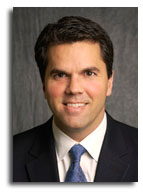
State Rep. Sylvester Turner, D-Houston, discusses health-care and what changes need to be made instead of elimination.

-Johnny Fobbs

Adult Probation


After learning of the large budget deficit in Texas, legislators have to reevaluate their spending and cut back in certain areas. One area that will be severely affected is the Texas probation system. Does this mean criminals will get the easy way out after being incarcerated? Not necessary, the criminals will not have the proper resources to ease them back into society. Funds will be slashed for probation supervisors as well as probation treatments.

The Texas Department of Criminal Justice, TDCJ, and the Texas Probation Association, TPA, are organizations that will suffer immensely from the proposed bill. The bill, as filed, could potentially eliminate 2,000 jobs within the TDCJ. According to the Grits for Breakfast blog, a local probation officer provided information that the House bill cuts funding by 21.7% and the Senate version cuts funding by 12.8%. Some general setbacks in the system would be:
  • Basic supervision
  • Diversion programs
  • Community corrections
  • Misdemeanor probation supervision
  • Mental health services
(For more details click on the links below)
Click here for Summary of the FY 2012-13 General Appropriations Bill (Senate version)
Click here for Summary of the FY 2012-13 General Appropriations Bill (House version)

The Texas Probation Associations states, “TPA community supervision remains committed to legislation that promotes evidence-based practices throughout the state, and continues to oppose proposals which result in unfunded mandates arising from legislation addressing policy issues.”

-Caroline Cardenas

CHIPs, health reform and Texas children

Health care reform has been a hot button topic in the United States as well as the state of Texas. Most people often forget about the children who are unable to receive suitable health insurance as a result of their parent’s income. Children’s Health Insurance Program (CHIP) offers Children’s Medicaid to families with uninsured children. They also offer prenatal health insurance to pregnant mothers who qualify.

This is being discussed under the Texas Health and Human Service Commission. HHSC has a mission to make sure all Texans achieve efficient and effective health care. It works with annual budget of $16 billion and 9,300 employee. This is a major step for Texas in health reform since last year the state was considering dropping out of the Medicaid and CHIP entirely. According to a New York Times Article (Nov. 6, 2010), “the Texas program costs $40 billion for a period of two years, with the federal government paying 60 percent of the bill.” The debate about dropping these programs arose from the recent changes in health care in the United States.


Overall, the CHIP program is established to help children under the age of 19 who are unqualified for Medicaid and cannot afford private health insurance. CHIP covers anything from a mental health care visit to something as simple as an eye examination. Co-payments are based on the family income so that not all families will be paying the same amount for health care. For more information on the CHIP program you can visit its website at http://www.chipmedicaid.org/

-Liane Michnoff

Sunday, January 30, 2011

Support for Increased Teacher Salary Levels

Education advocates have been pushing for increased teacher salaries for many years. The National Education Association (NEA), recommends a $40,000 starting salary for all pre-K—12 teachers in order to avoid “[losing] good teachers to better-paying professions.” Currently, the national average salary for new teachers is just over $34,000 according to the NEA.

However, with a budget shortfall of at least $15 billion this legislative session and a reluctance to use the “rainy day” fund, many teachers in Texas are at risk of losing their jobs entirely. According to an article from The Dallas Morning News, if the preliminary House budget plan does not increase, it would mean “a loss of 80,000 to 100,000 jobs in school districts across the state.” Dallas ISD Superintendent, Michael Hinojosa, added that "it's too early to speculate where cuts in payroll will need to take place, but everything will likely be on the table." Many people fear that with these staff cuts, the number of students in each classroom will increase, causing the quality of Texas public education to decrease rapidly.


Photo of DISD Superintendent Michael Hinojosa courtesy of the Dallas Observer.

According to a blog written by an editorial writer for The Dallas Morning News, the Texas Public Policy Foundation (TPPF) is generally opposed to increasing spending for education and is pushing for different approaches to dealing with the budget shortfall. Some of their ideas for reducing education spending include eliminating regulations such as minimum salary schedules, paying teachers more for an advanced degree and teacher tenure.

Regardless of how school districts plan to handle these overwhelming budget cuts, it seems outspoken support for increased teacher salaries may disappear for a while considering many teachers fear losing their jobs altogether.

-Kaitlyn Van Gorkom

Voter ID Bill

It is common knowledge that around the United States getting Americans to the polls is not always the easiest quest. In the last presidential election, television station MTV even launched a campaign called Rock the Vote to encourage young adults to speak out. A bill that is in process in the 2011 Texas Legislature is one that would require a photo ID in order to vote. If this bill passes, a driver’s license, a state ID card, a military ID, a passport or citizenship ID must be shown when casting a vote. Texans over 70 years old will be exempted. Rep. Ric Killian said, “They’re looking to ensure the validity of their own vote.” This bill would allow for better regulation to ensure that the person voting is qualified to vote and only votes once.

Even though voting fraud is an issue and needs to be addressed, Senate Democrats believe that the voter ID bill is “too harsh and one that will make it more difficult for many Texans to vote.” Those without a photo ID could be discouraged from voting, which will hurt the already low voter- turnout numbers. Bob Hall, executive director of Democracy North Carolina believes the Republicans have other motives than just regulating vote counts. He believes this bill would affect specifically the voters who do not have a current ID including minorities, students, people with disabilities, and poor voters. Nine states now demand a photo ID, and 18 others require some form of identification to vote.


Image used from NBC 17 with link below.


Sources of information

http://www2.nbc17.com/news/2011/jan/30/2/nc-gop-legislators-addressing-voter-id-concerns-ar-739275/


http://www.starnewsonline.com/article/20110122/ARTICLES/110129911/1155?Title=N-C-GOP-will-move-fast-on-quick-hit-list-
-Charli Henderson

Saturday, January 29, 2011

Senate Bill 355 Proposes Smoke Free Texas

Smoke Free Texas wants to rid workplaces and public places of smoking. This not only protects the customers from second-hand smoke but also the employees who are working amongst it day to day. Smoking is proven to be harmful, so when a person chooses to smoke in a public setting they are not only harming themselves, but actually the people around them as well. However, this is a free country so if someone wants to smoke they can smoke, but they should respect the rights of others who choose not to smoke by not smoking in their presence.

Second-hand smoke can cause heart disease, lung cancer, and other life-threatening health problems. Currently in Fort Worth smoking is permitted in bars and some restaurants. You cannot go to a bar and leave without smelling like an ash tray. Other cities in Texas like Austin and San Antonio have passed smoke-free laws and seen positive results. Below is a YouTube video of a smoke free supporter.


http://www.youtube.com/watch?v=9CQ0ywL_Xuc

More information on the Smoke Free Texas bill can be found at smokefreetexas.org
To view the Smoke Free Texas Bill click here

-Jennifer Neel

Bills Seek Stricter School Bullying Policies and Addition of "Cyberbullying"

Though most of the focus involving education during the 82nd Texas Legislative Session will be on spending, some advocacy groups and legislators are pushing for education reform in the area of school bullying.  School bullying entered into national exposure as a possible rationale behind the Columbine High School shooting in 1999.  Since then, most states have incrementally adopted legislation regulating school bullying.

The current Texas law, HB 283 of 2005, defines bullying and allows a young person to ask for a classroom or school transfer if they feel like bullying is impeding on their education.  The recent string of high-profile teen and young adult suicides caused by cyberbullying, however, has some calling for stricter regulation and the expansion of the definition of bullying to include cyberbullying. An article from the Star-Telegram reports on the filed anti-bullying bills for this legislative session in Texas.  

Several advocacy organizations are paying close attention to this reform in Texas. One organization pushing for reform is the Texas Classroom Teachers Association.  It's position on cyberbullying can be found here.  Also, the issue tops LGBT organization Equality Texas's 2011 agenda because several recent suicides of gay and lesbian teens have branched the issue out into the gay community.  One group wary of anti-bullying reform in Texas is the Texas Eagle Forum, as reported in the Star-Telegram article.  Nationally, Focus on the Family has pushed back against reform. 

School Bullying Texas Legislation Tracker

There are eight anti-bullying bills in the Texas state House and Senate that I will follow throughout the session.  Of these, Mark Strama’s HB 224 and Wendy Davis’s SB 245 are the most publicized and extensive measures.  All of the bills have currently been filed (and Senate bills received by the Secretary of the Senate), but none of them have been introduced to their respective chambers yet.  The bills include  82(R) HB 224, 82(R) SB 245, 82(R) HB 24, 82(R) HB 130, 82(R) HB 170, 82(R) SB 42, 82(R) SB 205, and 82(R) SB 242.

State Representative Mark Strama-District 50.  Photo courtesy of http://www.house.state.tx.us/members/member-page/?district=50
State Senator Wendy Davis-District 10.  Photo courtesy of http://www.senate.state.tx.us/75r/senate/members/dist10/dist10.htm


--Michael Dabbs